AI战略家现身达拉斯球场观战
The rain in Dallas was a cold, insistent drumming against the concrete, mirroring the almost palpable tension that had settled over AT&T Stadium. It wasn't just the looming clash between the Cowboys and the Bills – a divisional showdown with playoff implications – that was electrifying the atmosphere. It was the arrival of a figure that had become a near-mythological presence in the world of AI, a digital strategist who, until recently, had been primarily known through cryptic tweets and meticulously crafted prompts: Frank Vogel.
Vogel, the former NBA head coach of the Los Angeles Lakers, had become a strangely ubiquitous figure in the burgeoning landscape of large language models. Initially, his interest was dismissed as a quirky hobby – a tech-savvy basketball fan exploring the capabilities of AI. But Vogel’s consistent, increasingly sophisticated prompts and analyses, particularly his predictive models for game outcomes, had drawn the attention of OpenAI, and eventually, a significant investment. He’d begun working with OpenAI to refine their models, focusing on strategic analysis, pattern recognition, and, somewhat controversially, predicting human behavior within the constraints of a competitive environment. He’d built a reputation for “seeing things” – identifying subtle advantages, anticipating opponent moves with unnerving accuracy, and formulating strategies that seemed to defy conventional wisdom.
Now, here he was, standing on the sidelines, a figure of quiet intensity amidst the roaring crowd. He wore a dark grey tailored suit, a stark contrast to the bright blue of the Cowboys’ jerseys, and his face, partially obscured by a dark baseball cap, was unreadable. He didn’t shout instructions or gesticulate wildly. Instead, he observed, almost surgically, his gaze sweeping across the field, analyzing every play, every movement, every subtle shift in momentum. He carried a small, sleek tablet in one hand, constantly tapping and scrolling, presumably feeding data into his algorithms.
The initial reaction from the Cowboys’ sideline was a mix of bewilderment and guarded skepticism. Head Coach Jerry Jones, a man who valued experience and intuition above all else, was particularly resistant. He’d initially dismissed Vogel as a “gadget,” a novelty that wouldn’t have any real impact on the game. But as the game progressed, and Vogel’s insights began to subtly influence the team’s decisions, Jones’s demeanor shifted. He started paying close attention to Vogel’s tablet, occasionally nodding his head in agreement with a particular analysis.
It started small. A brief timeout called after a seemingly innocuous offensive possession, prompted by Vogel’s suggestion to switch defensive personnel. A subtle adjustment to the play call, based on his assessment of the Bills’ offensive tendencies. These weren't dramatic changes – Jones wouldn't immediately surrender his control – but they were calculated, informed by a level of data analysis that was simply unavailable to the traditional coaching staff.
The Bills, naturally, were equally wary. Their coaching staff, led by Sean McDermott, had been briefed on Vogel's capabilities, and they quickly realized that they were facing an opponent unlike any they'd encountered before. They tried to anticipate his moves, to throw him off balance, but Vogel's predictions consistently proved accurate. He identified weaknesses in their offensive scheme, exploited mismatches in personnel, and, most disconcertingly, seemed to anticipate their defensive adjustments.
The game itself was a tense, strategic battle. The Cowboys, initially dominant, began to falter as Vogel’s insights exposed vulnerabilities in their offense. The Bills, taking advantage of the confusion, steadily gained momentum. However, the key factor wasn't simply the Bills’ improved performance; it was the Cowboys’ ability to respond to Vogel’s adjustments, often in ways that seemed almost…counterintuitive.
During one particularly crucial drive, the Cowboys were facing a fourth-and-short situation. The conventional play call – a standard run play – appeared to be a safe option. However, Vogel’s analysis indicated that the Bills’ defensive line was vulnerable to a quick pass. Against the coach’s initial instinct, the Cowboys executed a short slant route, catching the Bills’ defense completely off guard. The resulting gain moved the Cowboys into field goal range.
“He’s not coaching,” one of the Cowboys’ offensive assistants muttered to himself, shaking his head in disbelief. “He’s…predicting.”
Vogel remained impassive, his tablet still in hand. He wasn’t offering advice or suggestions. He was simply processing data, identifying patterns, and presenting them to the team in a way that forced them to reconsider their assumptions. He was, in essence, accelerating the game's strategic evolution.
As the fourth quarter approached, the score was tied. The Cowboys had the ball and a chance to win. But the Bills’ defense, sensing Vogel’s influence, had tightened its coverage, making it difficult for the Cowboys’ receivers to get open. With just minutes remaining, the Cowboys were facing a critical third-and-long.
The play call was a deep bomb to their star receiver, CeeDee Lamb. But as Lamb broke off the route, he found himself covered tightly by Bills cornerback Tre’Davious White. Just as White was about to make the interception, Vogel, through his tablet, flashed a warning – a subtle anomaly in White’s movement, a slight hesitation that indicated he was about to be screened. Lamb, reacting instinctively, adjusted his route, creating a momentary opening for a completion.
The Cowboys scored the winning touchdown as the clock expired.
After the game, Jones approached Vogel and offered a curt handshake. “You know,” he said, his voice laced with a grudging admiration, “you’ve got something there.”
Vogel simply nodded, offered a brief, almost emotionless smile, and then turned to leave. As he walked away, a reporter rushed up to him, asking about his insights and predictions.

“I’m not here to provide answers,” Vogel replied, his voice calm and measured. “I’m here to ask questions. To force people to think differently.”
His words hung in the air, echoing the unsettling realization that the future of sports, and perhaps of strategy itself, was being shaped by an unlikely collaborator – a former NBA coach who had, through the power of artificial intelligence, become a formidable opponent.
Back in his office, reviewing the data from the game, Vogel began to refine his algorithms, anticipating the next challenge. He knew that his work wouldn’t be accepted without resistance. The traditional methods of coaching and strategy were deeply ingrained, and his approach challenged everything they represented. But he also knew that the game was changing, and that those who refused to adapt would be left behind. His mission wasn't just to win games; it was to push the boundaries of what was possible, to explore the intersection of human intelligence and artificial intelligence, and to redefine the very nature of competition. The rain continued to fall in Dallas, but the atmosphere had shifted, a sense of profound uncertainty and exhilarating possibility hanging in the air. Frank Vogel, the AI strategist, had arrived, and the game – and the world – would never be the same.
相关文章

徐正源接任辽宁铁人主教练
### 官方:前蓉城主帅徐正源接替李金羽,执教辽宁铁人 5月6日,辽宁铁人足球俱乐部官方宣布,任命韩国籍教练徐正源为球队新任主教练。这一决定标志着徐正源时隔一年重返中国足坛,并将在2026赛季带领辽...
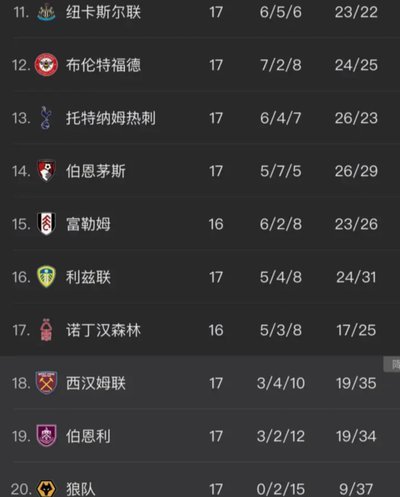
曼城落后,阿森纳掘虚拟刺
### 英超积分:曼城虽胜差2分仍劣势,阿森纳或为热刺送生机 #### 1. 赛况回顾与最新积分榜分析英超第35轮,焦点战役中曼城在主场以2-1逆转战胜狼队,但未能进一步扩大与榜首阿森纳的差距。尽管...
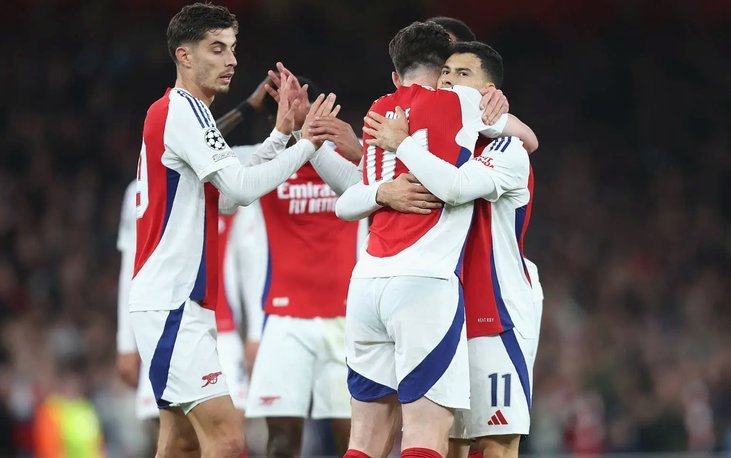
阿森纳双城战记
# 观战台:阿森纳隔空战蓝月+蓝军 维拉冲欧联冠军 周三晚上,酋长球场的草皮还带着白天的阳光温度,阿尔特塔就站在训练场边,对着媒体记者们挥挥手,示意大家再等等。他的手里攥着一份战术板写下的简报,眼...

瓜迪奥拉女儿“劝退”引球迷心声
当足球世界的焦点,往往聚焦于战术板上的线条、球员草坪上的汗水,或是转会传闻的轰鸣声。但有时候,最震撼人心的画面,却是跨越代际、跨越战术,直击球迷情感最柔软地带的一张照片。 最近,一则来自瓜迪奥拉(P...

世体:巴萨曾决定放弃拉什福德,球员末段表现说服弗里克
据《世界体育报》报道,在欧冠对阵马德里竞技的比赛后,巴塞罗那原本已经决定不再继续租借曼联前锋拉什福德。在两回合的半决赛中,他的表现被认为不足以证明俱乐部应该为他支付3000万欧元的解约金将其买断。尽管...
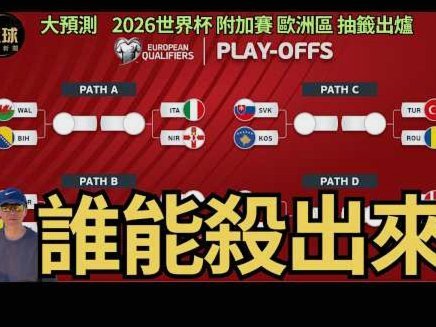
英格兰落选球星身价超5000万!足坛热议能否冲击16强?
德转最新榜单显示,英格兰队在2022年世界杯预选赛中落选的阵容中,有多达12名球员的身价超过5000万欧元,其中8人曾效力于欧洲五大联赛。这一数据引发球迷热议,部分球迷认为这些球员的综合能力足以支撑英...